A car that feels fine around town but starts shaking when you brake from highway speeds is giving you a useful clue. The vibration usually becomes noticeable through the steering wheel, brake pedal, seat, or sometimes all three at once.
Higher speeds create more braking force and more heat, which can make certain brake and suspension problems much easier to feel. The cause is often in the front brakes, but not always. At our shop, we look at the entire braking and front-end system before deciding which parts are responsible.
Brake Rotor Thickness Variation Is a Common Cause
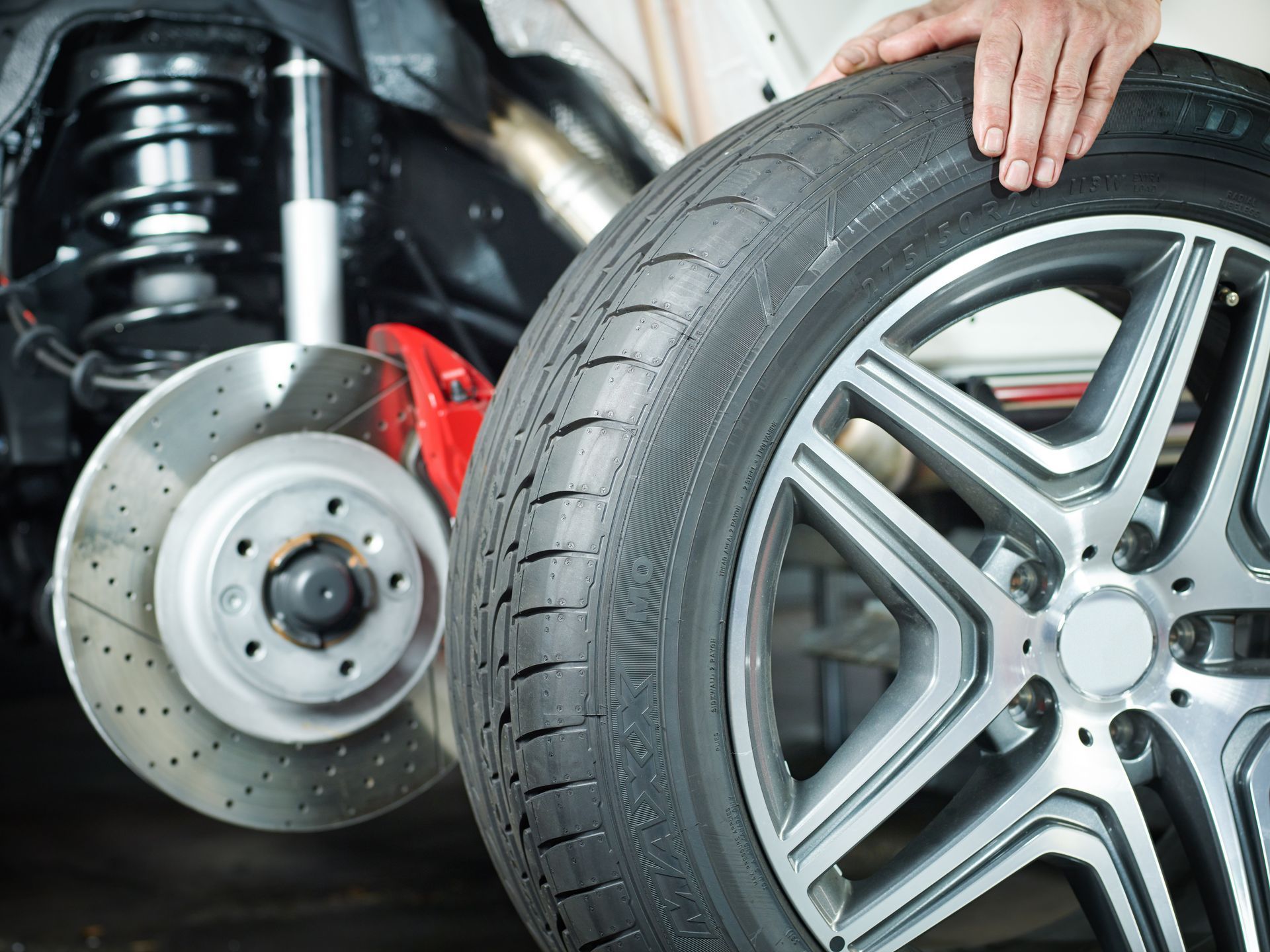
Many drivers hear the phrase warped rotors, but the real issue is often uneven rotor thickness or uneven friction material on the rotor surface. When the brake pads squeeze a rotor that is not uniform, braking force changes slightly as the wheel turns.
At low speeds, that variation can be too small to notice. At 60 or 70 MPH, it can create a strong shake through the steering wheel or brake pedal. We measure rotor thickness and runout instead of judging the rotor by appearance alone.
Overheated Brakes Can Create Uneven Friction
Repeated hard stops, mountain driving, towing, or riding the brakes can build up enough heat to change how the pads and rotors interact. If the brakes get too hot, pad material can transfer unevenly onto the rotor surface.
That uneven layer creates areas with different friction levels. Each time the pads pass over those spots, braking force changes and the driver feels a pulse or vibration. Replacing rotors without checking why they overheated can leave the new parts exposed to the same problem.
Worn Suspension Parts Can Make the Shake Feel Worse
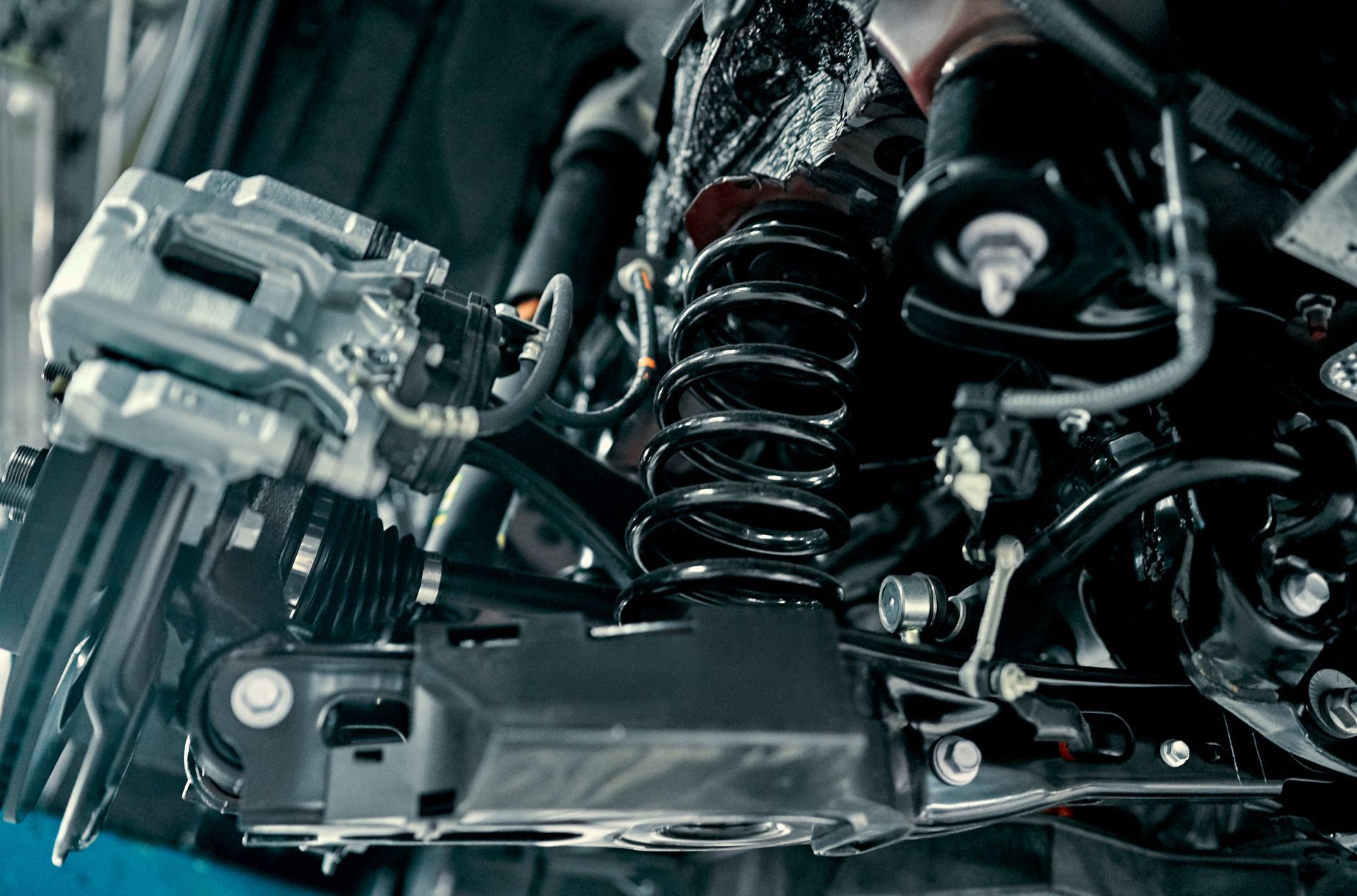
Braking shifts a large amount of vehicle weight toward the front suspension. If control arm bushings, ball joints, tie rods, or other steering components have excessive play, that load can make the wheels move farther than they should.
A vehicle can drive straight and feel stable while cruising, then shake or wander when the brakes are applied. During an inspection, we check for looseness before automatically blaming the rotors. New brake parts will not fix a control arm or tie rod that moves under braking load.
Uneven Brake Pad Wear Can Point to a Caliper Problem
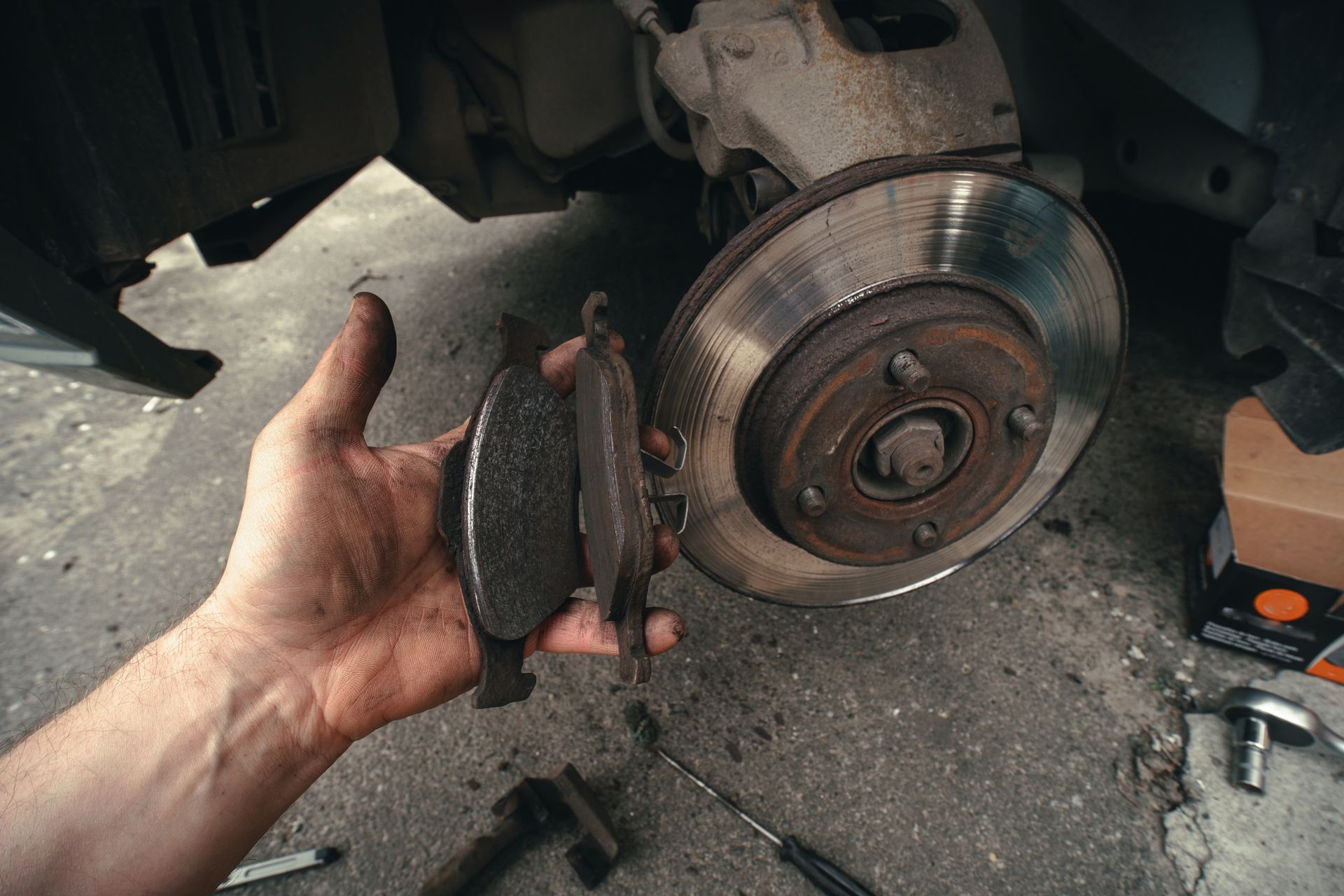
Brake pads on the same axle should wear at a reasonably similar rate. If one side is much thinner than the other, the caliper or slide hardware may not be moving correctly.
A sticking caliper piston or seized slide pin can keep one pad in contact with the rotor longer than it should. That creates extra heat and uneven wear, which can eventually contribute to vibration. We look at inner and outer pad thickness, caliper movement, and rotor condition together.
Wheel and Tire Problems Can Add to the Vibration
Sometimes a vehicle already has a mild tire or wheel vibration that the driver barely notices until braking loads the front end. An out-of-balance wheel, bent rim, or tire with internal damage can make the brake shake feel much stronger.
This is especially important if the vibration is present at highway speed even before the brake pedal is pressed. If the car already shakes at 60 MPH and braking simply makes it worse, we check the tires and wheels along with the brakes instead of treating it as a brake-only problem.
Pay Attention to Where You Feel the Shake
The location of the vibration helps narrow down the source. Steering wheel shake usually points us toward the front brakes, front tires, wheels, or steering components. Vibration through the seat can suggest something farther back.
Useful clues include:
- Steering wheel shake only during braking
- Brake pedal pulsing
- Vibration that gets worse after several hard stops
- Shake that appears even without braking
- A pull to one side while stopping
- Burning smell near one wheel
- One wheel running hotter than the others
- Uneven brake pad wear
The more specific the pattern, the faster we can separate a brake rotor problem from a suspension, tire, or caliper issue.
Do Not Replace Rotors Without Finding the Cause
If rotors have developed thickness variation or excessive runout, replacement or machining may be needed depending on their condition. But the repair should not stop there.
We also check wheel hub surfaces, lug nut torque, caliper operation, pad condition, and suspension wear. Rust or debris between the rotor and hub can prevent the rotor from sitting flat, while uneven lug torque can create stress. Fixing the underlying cause helps keep the new brake parts working correctly.
Higher-Speed Brake Vibration Should Not Be Ignored
A mild shake may still let the car stop, but vibration means the braking system isn't applying force evenly. If the steering wheel starts moving hard in your hands, the pedal pulses strongly, or the vehicle pulls during braking, the problem deserves attention.
Regular maintenance helps us catch pad wear, rotor condition, sticking calipers, and suspension looseness before the vibration becomes severe. The goal is to restore stable braking, not just stop the steering wheel from shaking.
Get Brake Vibration Diagnosis In West Palm Beach, FL, With Military Brake & Alignment Services Inc.
If your car shakes when braking at higher speeds,
Military Brake & Alignment Services Inc. in West Palm Beach, FL, can inspect the rotors, pads, calipers, tires, wheels, and suspension components to find the real source of the vibration.
Schedule a brake inspection before a highway-speed shake turns into uneven braking or additional component wear.